
- Trend 1: The Pervasive Integration of AI Across Marketing Functions
- Trend 2: Scaling Performance with Precision (The Impact of GenAI Ad Maker)
- Trend 3: The Rise of Hyper-Personalization Powered by AI
- Trend 4: AI-Driven Automation for Enhanced Efficiency and Productivity
- Trend 5: The Evolution of AI in Content Creation and Curation
- Trend 6: Navigating the Ethical Considerations and Future of AI in Marketing
- Key Takeaways
- Frequently Asked Questions (FAQs)
- What are the most impactful AI applications for digital advertisers in 2026?
- How can small businesses leverage AI in their marketing efforts?
- What are some common misconceptions about AI in marketing?
- How can marketers upskill to work effectively with AI tools?
- What are the key metrics for measuring the success of AI-powered marketing initiatives?
For digital marketers, incorporating AI into your workflow isn’t a trend, it’s a necessity — from strategy to execution to optimization and tracking, the importance of AI to your business is undeniable. Here’s what you should know for 2026.
What’s changed in our 2026 update:
- All stats and figures updated to reflect current information.
- Updated information around legal transparency requirements.
- New, current graphs and graphics.
Trend 1: The Pervasive Integration of AI Across Marketing Functions
Digital marketers are increasingly embracing machine intelligence, embedding it in a wide range of business functions. That includes content creation, customer analytics, and campaign optimization. To remain competitive, marketers are restructuring their workflows to prioritize AI, and the number of organizations deploying the tech in one or more business functions rose to 88% in 2025, up from 78% in 2024.
As a result, teams are evolving to accommodate the new technology. Manual, time-consuming processes like creating social media posts and analyzing data can be handled by machines, freeing up humans to focus on strategic insight and creative oversight.
Here are a few statistics showing how AI is infiltrating almost every area of marketing:
- More than 80% of marketing teams actively use generative AI.
- 93% of chief marketing officers report clear return on investment (ROI) from using GenAI.
- Companies using AI in marketing report 20-30% higher ROI than traditional marketing methods.
- Among marketers already using AI, 93% use it to generate content faster and 81% use it to boost brand awareness and sales.
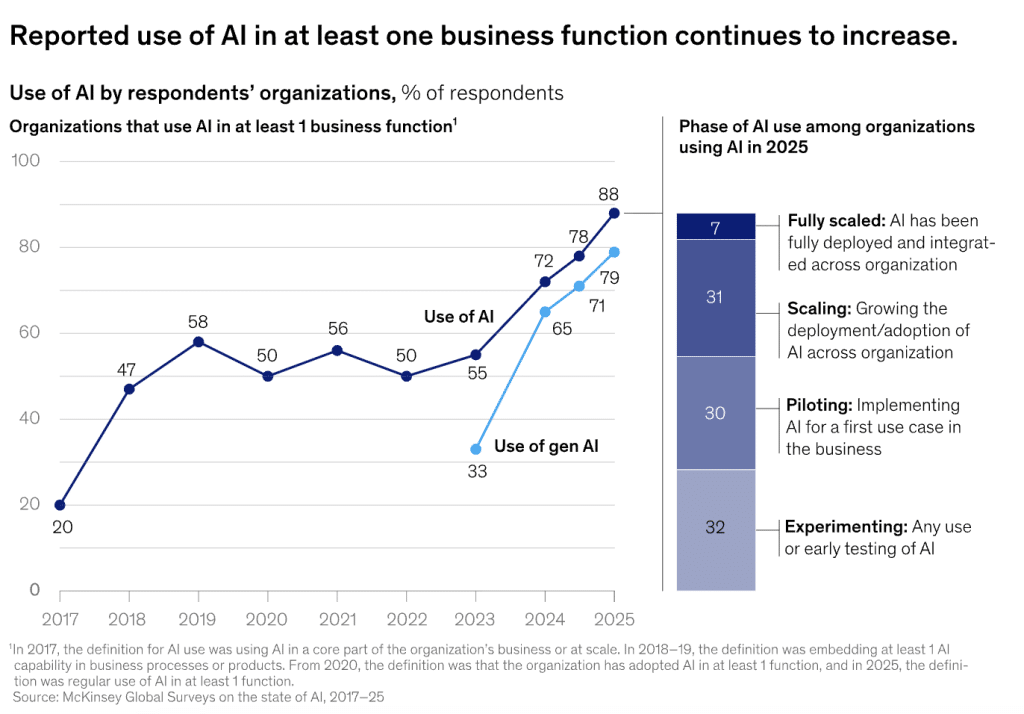
Source: McKinsey
With so many tools now available, marketers can streamline everything from targeting to creative execution. Predictive analytics tools like Adobe Sensei and Google AI for ads can optimize bidding in real time, while generative solutions like Jasper, Copy.ai, and Midjourney can tackle ideation and design. Tools like HubSpot and ActiveCampaign bring AI to lead nurturing and segmentation. AI-powered performance platforms like Realize, meanwhile, can tackle everything from smart audience targeting to landing page creation to real-time ad optimization.
To foster a culture of AI adoption, marketing teams should include training as they introduce new tools. It’s also important to ensure employees understand that AI will enhance, not replace, their value as part of the team.
Trend 2: Scaling Performance with Precision (The Impact of GenAI Ad Maker)
The collaboration between Columbia University and Realize highlights how generative AI is no longer just a tool for efficiency, but a primary driver of performance marketing at scale. By utilizing the GenAI Ad Maker, advertisers are able to move beyond the limitations of manual creative production, achieving results that rival or exceed traditional methods.
- Human-Level Performance at Scale: The study, analyzing over 500 million impressions, proved that AI-generated ads deliver click-through rates (CTR) on par with human-made ads, with raw data even showing a slightly higher average CTR of ~0.76% for AI versus ~0.65% for humans.
- Built-in Best Practices: The GenAI Ad Maker is uniquely powerful because it integrates long-standing creative best practices. For example, AI-generated ads were actually more likely to include large, clear human faces—the single most influential factor in driving engagement—than human-made ads in the same campaigns.
- No Conversion Trade-off: A critical takeaway for performance marketers is that AI improves top-of-funnel engagement (CTR) without sacrificing downstream conversion quality. This disproves the common fear that AI ads only drive “curiosity clicks” or low-quality traffic.
- The “Secret Sauce” of Perception: The power of the GenAI Ad Maker lies in its ability to create ads that don’t “look like AI”. Ads perceived as human-made achieved the highest performance of all groups, demonstrating that when AI is used to enhance human-centered cues, it sets a new ceiling for engagement.
Columbia Study Form
Trend 3: The Rise of Hyper-Personalization Powered by AI
Personalization is the name of the marketing game in 2026. Customers expect content to be tailored to their interests, and businesses are rising to the challenge. AI-powered tools are making it easier than ever to personalize content, since businesses can gather behavioral and contextual data, which AI algorithms then use to tailor messages based on real-time signals like:
- Browsing behavior.
- Device type.
- Geolocation.
- Time of day.
Predictive analytics allows marketers to deliver content before customers even know it interests them. Businesses like Netflix and Amazon are also using AI-driven recommendation engines that suggest content or products a customer is likely to enjoy.
These statistics highlight the growing shift toward hyper-personalization:
- 71% of customers now expect personalized interactions from brands, and 76% feel frustrated when brands fail to deliver them.
- 79% of marketers use AI to personalize content and campaigns.
- Personalized calls-to-action (CTAs) can convert ~202% higher than generic CTAs.
- 82% of consumers are willing to share personal data in exchange for more customized experiences.
- While 85% of companies say they provide personalization, only 60% of consumers agree.
With increased use of data comes privacy considerations. Some consumers find ultra-targeted messaging intrusive, particularly if they feel that ads are manipulative. They may also wonder how all that collected data is being used. Brands need to prioritize transparency and user control if they want customers to see them as trustworthy.
This can include:
- Clear opt-in mechanisms.
- Accessible privacy settings.
- Easy-to-understand AI practices.
Ethical personalization means not only understanding consumer privacy concerns but addressing them in your terms of service. It’s important to respect boundaries and avoid harmful biases when using the data you collect through your website visitors and ad leads. The goal is to ensure you’re offering a top-notch user experience without compromising privacy.
Trend 4: AI-Driven Automation for Enhanced Efficiency and Productivity
One of the biggest benefits of automation for marketers is that it tackles mundane, time-consuming tasks, freeing up marketers to focus on strategy and creativity. But, that’s not the only benefit of AI-driven automation. Here are a few statistics showing how marketers are using and benefiting from it:
- 79% of marketers automate their customer journey, from partial to full automation.
- 50% of marketers use automation daily, optimizing routine tasks and workflows.
- Of marketers who use automation, 80% report increased lead generation.
- 71% of marketers use automation for email marketing, making it the most automated channel.
AI’s benefits go beyond tackling repetitive tasks, too. In 2026, brands are automating customer service: Using chatbots and virtual assistants, businesses can easily handle initial inquiries, answering questions that previously would have taken hours a day of a team member’s time. That allows employees to deal with more complex questions and problems.
AI-powered automation can also improve ROI for your marketing efforts. Algorithms can now automatically adjust your bids, recalibrate ad spend, and shift placements in real time to optimize your efforts for each customer.
Marketers also now rely heavily on AI for email marketing. AI-powered software can auto-generate subject lines, tailor delivery times, and trigger follow-ups based on customer behaviors. Once campaigns are launched, marketers now turn to AI-supported reporting that can easily pinpoint anomalies and surface opportunities almost as soon as a campaign has launched.
Trend 5: The Evolution of AI in Content Creation and Curation
When it comes to content creation, blog posts and ad copy tend to be front and center in discussions. But, AI can also create images, videos, podcasts, and more.
Statistics support AI adoption across a variety of content creation functions:
- Approximately 66% of people worldwide use AI regularly.
- 60% of U.S. adults use AI to search for information, increasing to 74% for those under 30.
- 86% of global creatives incorporate generative AI into creative workflows, and 81% say it enables them to produce work they couldn’t otherwise make.
- About 20.5% of people worldwide use voice search.
- AI-generated metadata boosted video view performance by up to 7.1%.
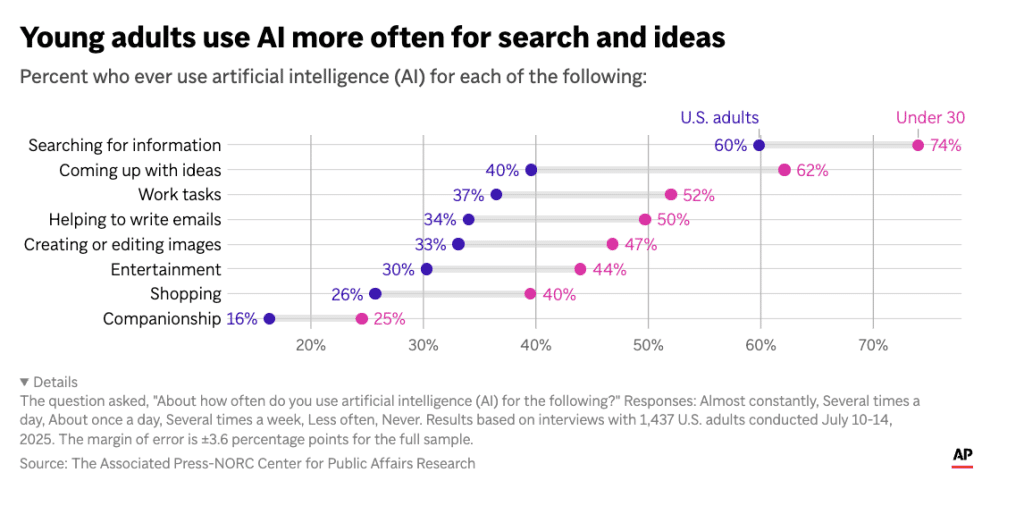
Source: Associated Press
Where AI really excels is in kickstarting the content creation process. AI can draft blog outlines and ad copy variations, or even provide weeks’ worth of social media posts in just a few minutes. For content curators, AI can dig through decades of videos and articles, then suggest items to repost to engage customers.
AI’s role in voice search is expanding as well. As consumers increasingly search the internet using voice assistants, marketers are gathering information on common voice queries and tailoring their content to match typical phrasing. AI can even recommend keywords and automatically make metadata adjustments.
Unfortunately, though, AI isn’t flawless. As many marketers have learned, the technology struggles to remain consistent over time, which can be a problem if you’re trying to stick to a particular brand voice. The technology can also output false information, making it essential to have a human review every piece of content before it goes live.
Trend 6: Navigating the Ethical Considerations and Future of AI in Marketing
In the final months of 2026, some trends are emerging that can directly impact marketers’ campaigns. Those include an increase in hyper-personalization, AI-driven visual search, and AI’s assistance in tracking down relevant influencers.
As marketers fully embrace AI, though, various ethical concerns have emerged. Here are a few of the top considerations for today’s marketers:
- Bias in algorithms: AI was trained on years of data, including books, websites, and photos. As a result, the technology regularly exhibits social, racial, and gender biases in the information it outputs.
- Data privacy and consent: When gathering user data, it’s important to respect privacy laws, including General Data Protection Regulation in the European Union (EU) and the California Consumer Privacy Act.
- Misinformation: Generative AI can be prone to something called hallucinations, which has it confidently outputting information that either doesn’t make sense or is factually inaccurate.
- Intellectual property concerns: Copyrighted material was used to train AI. This brings ethical concerns about its use as marketers navigate the complexities of copyright law and fair use.
- Deepfakes and synthetic media: AI-generated photos, videos, and audio have been used for fraud, causing trust issues for consumers.
- Environmental impact: Generative AI consumes water and energy, leading to ethical concerns about its environmental impact.
On top of ethical concerns, marketers need to navigate regulations relating to the use of generative AI. Currently, marketers in the EU must pay close attention to the EU AI Act, which has entered phased enforcement and expands disclosure, transparency, and risk-classification requirements for AI systems. In the U.S., AI regulation remains fragmented, with a growing number of state-level transparency and consumer protection laws influencing how AI can be used in marketing.
Organizations now report they’re actively mitigating generative AI-related risks, with inaccuracy, cybersecurity, and intellectual property infringement being the top issues.
- 75% of organizations now have some AI usage policies in place, but only 36% have a formalized governance framework.
- 3 in 5 businesses are now monitoring AI systems for fairness, bias, and transparency.
- Of the U.S.’s public companies, 36% now disclose AI as a separate risk factor in SEC filings.
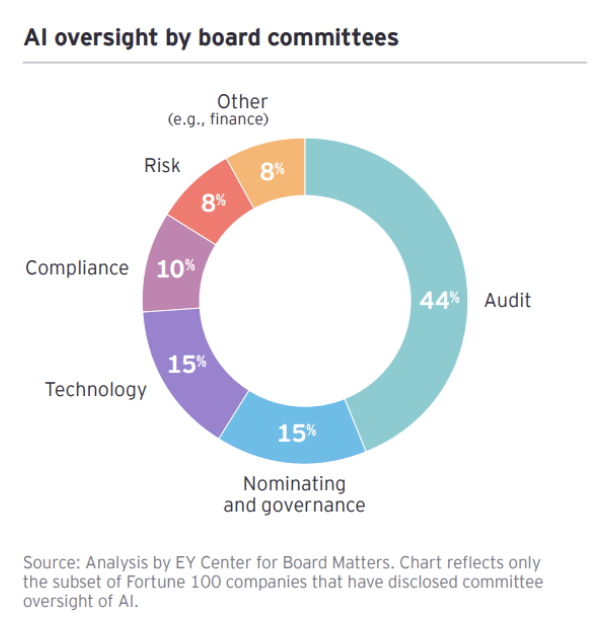
Source: Harvard Law School Forum on Corporate Governance
For marketers, these changes mean a likely future shift in job duties. As AI automates time-consuming processes like pulling reports and segmentation, professionals will gradually shift to strategic oversight and ethical governance. Due to this shift, marketers are being called upon to develop new skills like prompt engineering and data literacy.
To ensure responsible AI use, brands should prioritize transparency, accountability, and consent. Establishing internal processes for checking AI content for inaccuracies and bias can help retain customer trust in your brand.
Key Takeaways
AI has made its way into almost every facet of marketing, from ideation to execution and analysis. As these tools become more prevalent, ethical concerns are emerging, including consumer privacy. While AI excels at generating content, human intervention is needed to maintain quality and reduce the risk of costly errors. In 2026, AI is no longer optional — it’s a baseline expectation: Brands need to implement the technology responsibly to remain competitive.
Frequently Asked Questions (FAQs)
What are the most impactful AI applications for digital advertisers in 2026?
In 2026, digital advertisers are seeing AI’s impact in four key areas:
- Predictive audience targeting.
- Real-time bid optimization.
- Dynamic content personalization.
- Automated performance reporting.
Advertisers who use predictive AI to anticipate user intent are outperforming traditional advertisers who still rely on targeting users by demographics. Meanwhile, marketers are using AI to test dozens of ad variations in seconds, allowing them to identify the ads most likely to get ROI while adapting creative and spend in near real time.
How can small businesses leverage AI in their marketing efforts?
Small businesses can benefit from AI as much as enterprise-level brands. Chatbots and virtual assistants can be great entry points, helping automate efforts in small ways before expanding to more intensive applications. Small biz marketers can also use AI to repurpose content across multiple platforms, personalize email campaigns, and target ads based on intent signals rather than location or interests. Look for affordable tools that provide drag-and-drop interfaces and guided workflows to minimize the learning curve and reduce dependency on in-house technical expertise.
What are some common misconceptions about AI in marketing?
One of the biggest misconceptions about AI is that it will put marketers out of work. Over the years, automation has proven to serve as more of an assistant, taking care of time-consuming, mundane tasks and shifting professionals to higher-level responsibilities.
Another misconception is that AI is infallible and impartial. In truth, AI was trained on human-created data, which means it requires human oversight to ensure its output is both accurate and fair.
Lastly, some assume they can simply set up an automation and leave it, letting AI do all the work. Unfortunately, the technology needs ongoing oversight and evaluation to ensure it’s functioning properly as data, algorithms, and regulatory expectations evolve.
How can marketers upskill to work effectively with AI tools?
To excel in this new, AI-driven environment, marketers should focus on building foundational knowledge in data literacy, analytics, and prompt engineering. As AI begins to play a larger role in content creation, marketers can upskill by learning to evaluate its output for tone, quality, and bias — all skills that will become increasingly important. To further solidify their value, marketers are seeking certifications in popular AI platforms and attending workshops.
What are the key metrics for measuring the success of AI-powered marketing initiatives?
As with any marketing effort, it’s vital to measure your efforts. For AI-powered initiatives, here are a few metrics to track:
- ROI improvement: Are your efforts bringing an increase in revenue without upping your spend?
- Acquisition cost reduction: Has AI helped you bring in new customers with reduced effort and cost?
- Click-through-rate uplift: Are more customers clicking on your ads and calls to action?
- Conversions: How many clicks turn into actual sales?
- Time savings: Has AI saved time for you and/or your team?
- Compliance and transparency rates: When conducting compliance audits, is your AI output fair, unbiased, and compliant with any emerging regulations?


