
- Trend 1: Building Digital Trust and Security in Financial Services Marketing
- Trend 2: Personalization and Customer Experience in Financial Services
- Trend 3: The Rise of Mobile-First and App-Based Financial Services Marketing
- Trend 4: Leveraging Content Marketing and Financial Literacy Initiatives
- Trend 5: The Strategic Use of Social Media and Influencer Marketing in Finance
- Trend 6: Navigating Regulatory Landscapes and Compliance in Digital Finance Marketing
- Key Takeaways
- Frequently Asked Questions (FAQs)
In the financial services sector, there’s always a tricky balancing act, raising brand awareness while maintaining strict adherence to consumer privacy laws. In 2026, as these privacy concerns take center stage, banks, credit unions, fintech solutions firms, and other financial services providers are all rethinking how they engage with consumers, while also trying to build trust.
With such a constant evolution of consumer expectations and the relentless march of innovation in technology, it can be tough to keep on top of it all. To help you figure out what’s what, here are six trends currently shaping financial services marketing strategies.
What’s changed in our 2026 update:
- All entries include updated and current information and advice.
- All stats and figures updated with new and current information.
- All new graphs and graphics added.
- All FAQs updated with current information.
Trend 1: Building Digital Trust and Security in Financial Services Marketing
Artificial intelligence (AI) has become a useful tool for financial services providers. At the same time, though, it’s also creating new challenges. The emergence of deepfake scams and other types of AI-generated fraud means consumers need to remain vigilant. For financial services marketers, that brings a new challenge to overcome: How do you make it clear that your platforms and services are safe?
Here are some key statistics eroding consumer trust in 2026:
- A.I.-driven fraud now constitutes 42.5% of all detected fraud attempts in the financial sector. This highlights the growing need for robust digital trust measures.
- 60% of companies faced AI-enabled attacks in the past year, showing a sharp acceleration of AI-based fraud and scam tactics
- Personalization is a must. Of customers surveyed, 71% expect personalized interactions with brands and 76% get frustrated with more generic messaging.
- 72% of financial institutions are concerned about data quality.
In 2026, it’s more important than ever to be transparent with both prospects and existing customers. Communicate clearly the measures you’re taking to keep consumer data safe, including security measures and data collection protocols. Even if customers don’t read every word of the privacy policies on your site, notifications when you have updates can remind them that you take security seriously.
Customer testimonials can also build credibility for financial services brands. In addition to statements about your services, make sure you have at least a couple of testimonials that speak to your commitment to security.
A word of warning, though: The financial services sector is tightly regulated to protect consumers. As a marketer, you’ll need to avoid misleading claims of the type laid out by the Federal Trade Commission as Unfair or Deceptive Acts or Practices. You’ll also have to make sure your disclosures are in compliance and keep your email marketing in line with the CAN-SPAM Act.
Building consumer trust goes beyond your marketing tactics. When your business prioritizes security and transparency, that will show through to your customers.
Trend 2: Personalization and Customer Experience in Financial Services
Financial services marketers have a number of cutting-edge tools at their disposal, and those tools have made personalization easier than ever. That means for marketers in the space, personalization is becoming crucial for staying competitive in a field crowded with banks, credit unions, and solutions providers.
Today’s financial services marketers harness data analytics and AI to deliver tailored experiences to both potential and existing customers. Here are some of the top strategies they’re using:
- Data-driven insights: Using customer information, marketers are personalizing advice, offers, and messages across all platforms, whether they’re communicating by email or creating and distributing display ads.
- Seamless digital journeys: Consumers don’t always stick to one device when shopping for financial services. Savvy marketers are focusing on providing a seamless journey as customers move between mobile devices and desktop.
- Long-term engagement: Winning a new customer is only the beginning: Financial services marketers are now focusing on fostering long-term relationships through personalized interactions that evolve over time.
Here’s what else you need to know:
- 72% of customers cite personalization as a deciding factor in where they bank.
- 84% of customers would switch banks for timely, personalized advice, and 74% would stay loyal when tailored insights and automated money management are offered.
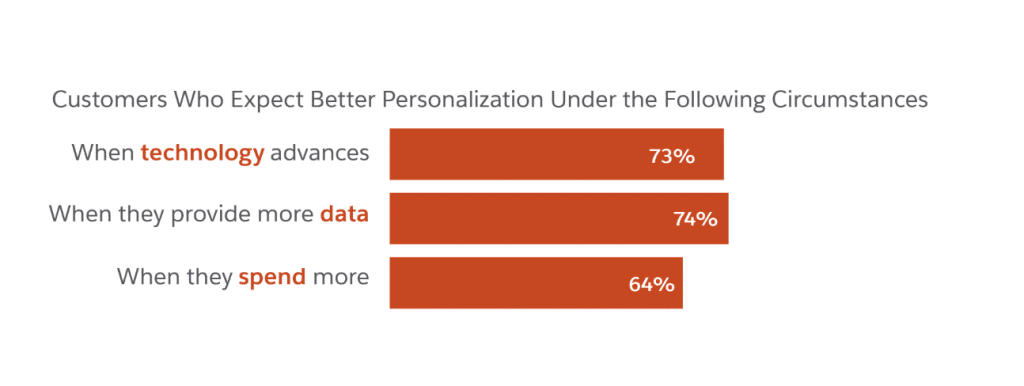
- 73% of customers expect more personalization as technology advances, while 64% expect it as their spending increases.
- Omnichannel personalization is essential to good customer service. While 79% of customers want consistent communication across departments, 55% percent feel communications are too disjointed.
Source: Salesforce
Personalization isn’t an option in 2026 — it’s required to remain competitive. The right tech tools make it easy to responsibly target customers and personalize interactions to boost engagement.
Trend 3: The Rise of Mobile-First and App-Based Financial Services Marketing
At one time, mobile was considered a “second screen,” with most consumer activity happening on a laptop or desktop. In 2026, though, apps dominate the space, which means mobile marketing should take center stage in your strategies.
Here are some stats showing just how consumers access financial services today:
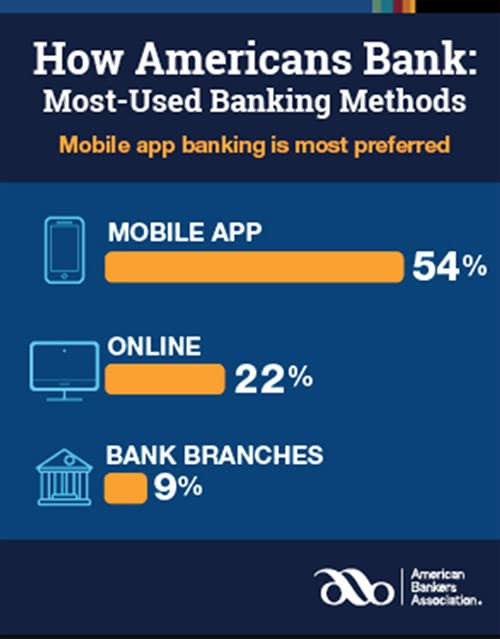
- 54% of U.S. bank customers say they use a mobile app as their primary way to manage an account.
- 52% of customers check their favorite financial app at least once per day.
- Customer satisfaction with financial apps remains high. 84% of mobile banking users report satisfaction with the mobile experience on their primary financial app.
Source: American Bankers Association
Banks and credit unions have especially embraced the app experience, putting pressure on other lenders to offer fully functional apps to their customers. But, it’s not enough to offer an app: To fully engage customers, financial service marketers should optimize their app’s functionality and user experience. Customers should find the app easy to use, with intuitive screens and all the features they need.
Personalizing each user’s experience can be a great way to engage customers. For banks and credit unions, it’s especially important for apps to be fully featured, giving account holders the same services they’d receive if they visited a branch.
Once customers have the app, they should be able to opt in to receive push notifications. Make sure these notifications are related to information a consumer wants, such as when a bank balance drops below a certain threshold or a new statement is ready.
Even the best app will flounder if customers can’t find it, so be sure to include easy download options in customer emails and other communications. In terms of making it discoverable to people searching, use the right keywords for your app’s title, subtitle, and description, and always check to ensure you’ve chosen the right category. You’ll also want to use eye-catching images for your icon and screenshots, making sure they accurately describe what your app offers.
Competition is fierce in the financial services sector, but with a little extra work, you can stand out. Personalization and optimization are key to winning new customers and keeping them around for years to come.
Trend 4: Leveraging Content Marketing and Financial Literacy Initiatives
Content marketing has emerged as a powerful way for financial services marketers to connect with customers. By providing information that answers questions consumers have, you can stand out from your competitors.
A few key stats show the demand for financial education in the United States:
- Financial literacy rates in the U.S. remain low, with adults answering only 49% of personal finance questions correctly on average.
- Baby Boomers and the Silent Generation showed the highest financial literacy, at 55%, while Gen Z had the lowest, at 38%.
- 61% of U.S. adults say they’d be uncomfortable discussing their bank account balances with close friends or family.
- Women tend to report lower confidence and often score lower on financial literacy assessments than men.
GMF, a leading mutual insurance group, demonstrated how powerful educational content can be. Through display ads pointing to a landing page offering helpful information about GMF’s products, along with the option to submit their information to move further down the funnel, GMF boosted lead volume by 82%, exceeding its goal.
Whether you choose blog posts, videos, webinars, interactive calculators, or a combination of all of the above, you’ll need to touch on the topics that interest your customer base. Depending on the type of services you offer, here are some ideas for educational content:
- Budgeting: Step-by-step guides on creating a budget, along with budgeting templates, tend to be popular with consumers.
- Credit scoring: Whether consumers need to improve their credit score or build one from nothing, a guide to how scoring works can help.
- Debt reduction: With the average consumer debt topping $100,000, it’s more important than ever to explore manageable ways to pay off loans and other debts.
- Saving: Setting aside money, whether for next summer’s vacation or eventual retirement, can be tough. A guide going through small steps to save can help consumers start down the right path.
- Investing: Many consumers are daunted at the prospect of putting money into the stock market. A beginner’s guide covering various investing options, along with their level of risk, could work well for an investment firm or bank.
As you’re creating educational content, don’t forget search engine optimization. With consumers increasingly relying on voice search, AI-powered search tools, and conversational queries, financial service providers have a prime opportunity to create content that answers some of the most frequently asked questions within their vertical.
Trend 5: The Strategic Use of Social Media and Influencer Marketing in Finance
Social media remains one of the best places to find an audience. In 2026, however, many financial marketers are reporting flatter returns from traditional social campaigns. Audience saturation, ad fatigue, algorithm inefficiencies, and rising ad costs are some of the top reasons marketers believe social is less effective these days.
Don’t toss your social media strategy out the window just yet, though, because with the right approach, you can still get a decent return on investment for your social media efforts. The first step is to choose social media platforms that match your marketing goals and typical demographics. If you’re trying to reach younger consumers, for instance, short-form videos on TikTok might be a better approach, while customer testimonials on Facebook or YouTube could help you reach older audiences.
Influencers can help financial services marketers get in front of consumers, too, but again, it’s important to remain compliant while doing so. The Federal Trade Commission maintains strict rules for disclosing paid partnerships, and those rules apply whether you’re compensating the influencer with cash or free products or services.
Analytics are the last piece of the puzzle when it comes to social media marketing. It’s important to regularly track performance on all your efforts, from social media posts to paid ads to influencer collaborations. By gathering this data and letting it inform future marketing efforts, you can boost efficiency.
A few interesting stats on social media and influencer marketing include:
- 24% of investors say they receive financial information from social media, and 35% of respondents under 30 rely on social media for financial insights.
- In the general consumer population, 47% say social media has helped improve their financial decision-making, but that rises to 62% among Gen Z.
- 58% of adult consumers have purchased products because of an influencer endorsement.
Trend 6: Navigating Regulatory Landscapes and Compliance in Digital Finance Marketing
Financial service providers face tighter regulations than many other industries, and those regulations have to be considered when you’re planning and launching marketing campaigns.
Here are some statistics relating to regulation and compliance in 2026:
- Only 10% of financial institutions use a fully automated compliance management system, while 58% combine automation with spreadsheets and/or email.
- 25% of financial institutions expect their compliance budgets to increase in the next 12 to 18 months, while 45% expect budgets to remain flat.
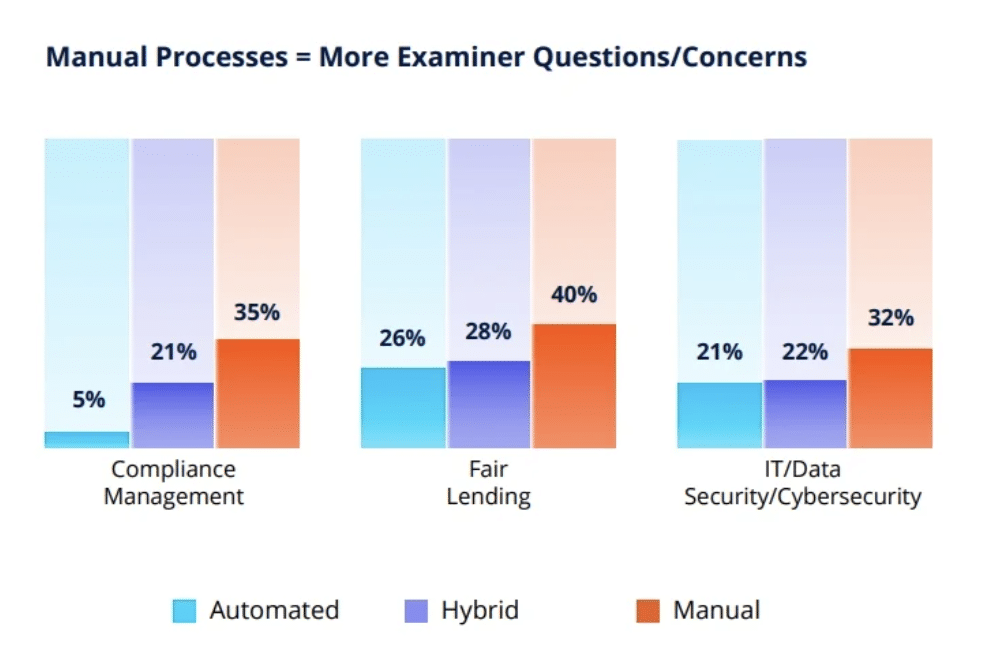
- Compliance teams using manual processes report 7x more examiner questions and concerns and 4x lower satisfaction with staffing and strategic influence than those using automated tools.
- In 2024, the Financial Industry Regulatory Authority (FINRA) reviewed 75,125 advertisements and sales communications. The agency logged 730 disciplinary actions.
Source: Ncontracts
In 2026, marketers need to pay close attention to:
- U.S. Securities and Exchange Commission (SEC): Financial services marketers must comply with the SEC’s Rule 206(4)-1, otherwise known as the marketing rule. This rule sets strict requirements on statements that can be made in marketing and advertising.
- FINRA: This nonprofit regulates brokers and exchange markets. Under FINRA regulations, marketers must ensure all statements are accurate, fair, and not misleading.
- Truth in Savings Act of 1991: Also known as Regulation DD, this act requires disclosures on all terms and conditions that come with a new account or lower interest rate.
- General Data Protection Regulation (GDPR): This applies specifically to European customers. If you market outside the U.S., it’s important to be aware of GDPR’s restrictions on how EU consumer information can be collected and used.
Following these regulations will not only help you avoid legal repercussions and steep fines, but you’ll also be able to build trust with your customers. Just remember, you’ll need to be proactive to ensure your marketing campaigns are 100% compliant.
Some key compliance strategies include:
- Keeping an eye out for any changes in federal and local regulations that might apply to your marketing.
- Conducting frequent audits of your marketing materials to ensure you’re in compliance with all current regulations.
- Educating all relevant staff on compliance regulations and putting best practices in writing.
- Leveraging tools that help automate the process of checking marketing materials for any compliance issues.
Key Takeaways
In a privacy-conscious sector, financial services brands can build trust by prioritizing transparency and security in all marketing efforts. In 2026, personalization is essential, and AI can help with delivering tailored experiences that satisfy individual consumer needs. When gathering data and using it for targeting, though, it’s crucial that financial services brands pay close attention to privacy regulations in addition to all compliance requirements. By creating engaging educational content and optimizing your mobile apps, you can build trust while making your marketing work for you.
Frequently Asked Questions (FAQs)
What are the most effective digital advertising channels for financial services in 2026?
Social and search remain relevant in 2026, but soaring ad costs and customer fatigue have led financial service marketers to diversify their efforts. Pay-per-click, native, and display advertising, alongside email marketing, are solid performers for finance messaging, with greater emphasis on privacy-safe targeting, contextual relevance and creative optimization. Using technology to improve targeting and personalize your ads can keep you competitive.
How can financial institutions generate leads and acquire and retain customers cost-effectively online?
For financial marketers, 2026 is all about winning and retaining customers while also keeping costs low. Banks and credit unions are focusing on personalizing their marketing efforts to ensure each message has maximum impact. Many financial institutions now rely heavily on AI-powered tools that can deliver targeted content and offers, boosting the chances that recipients will take action. In addition, first-party data strategies, improved onboarding flows, and frictionless mobile experiences play a growing role in lowering acquisition costs. Investing in user-friendly apps and offering useful educational content can improve customer loyalty, effectively reducing acquisition costs.
What are some successful examples of financial services digital marketing campaigns?
Successful digital marketing campaigns in the finance sector often combine personalization, educational content, and the strategic use of technology. JPMorgan Chase is just one example of some of the biggest brands prioritizing financial literacy. The multinational corporation dedicates a section to its website called Research, and in that section, you’ll find thought leadership content and original research that helps establish it as a trusted resource. If you decide to go this route, don’t stop at publishing the content: It’s important to promote it in different formats on different channels to make sure it’s viewed by the widest possible audience.
How is AI impacting the financial services marketing landscape?
AI stands poised to impact every area of financial services marketing, from targeting and hyperpersonalizing content, to image and copy creation, to chatbot-powered customer service and analytics. Financial services marketers can analyze large swaths of data to get never-before-available insights, then use that information to identify trends and customer needs. In 2026, AI is increasingly used for predictive modeling, creative testing at scale, and real-time campaign optimization, and it can also be used to audit marketing processes to ensure regulatory compliance.
What are the key metrics for measuring success in financial services digital marketing?
Before you can use the latest tools to measure your marketing success, you need to understand the most important metrics. In 2026, key performance indicators for banks, credit unions, investment brokerages, and other financial services providers include customer acquisition cost, customer lifetime value, cost per lead, and conversion rates. Financial services marketers should also pay attention to engagement metrics like click-through and open rates, as well as retention, lifetime engagement, and incremental lift across channels. Overall, paying attention to your return on investment can help you ensure you’re getting the most out of your marketing efforts and expense.


